How to create an inspiring and functional playroom for children?
Transforming a simple room into a true adventure playground requires some thought. Designing a playroom isn't just about accumulating toys, but about creating a space where imagination can flourish freely. It's about finding the right balance between creative freedom and a reassuring structure to offer young children a space that reflects their own personality.
Create a playroom that is both fun and organized
A well-designed playroom immediately encourages exploration while remaining
a pleasant space for everyday use. The goal is to avoid visual chaos, which
can overstimulate or discourage a child. Good
playroom organization relies on clearly defining different areas. This
allows children to intuitively understand where each type
of activity takes place.
To find the best idea for a child's playroom ,
first observe their habits. Do they like to spread out on the floor building
castles, or do they prefer to perch on a stool to draw? Meeting
these specific needs ensures that the room will actually be used and
enjoyed.
Carefully consider the space according to the age and needs of children
Quiet zones, creative zones and free play areas
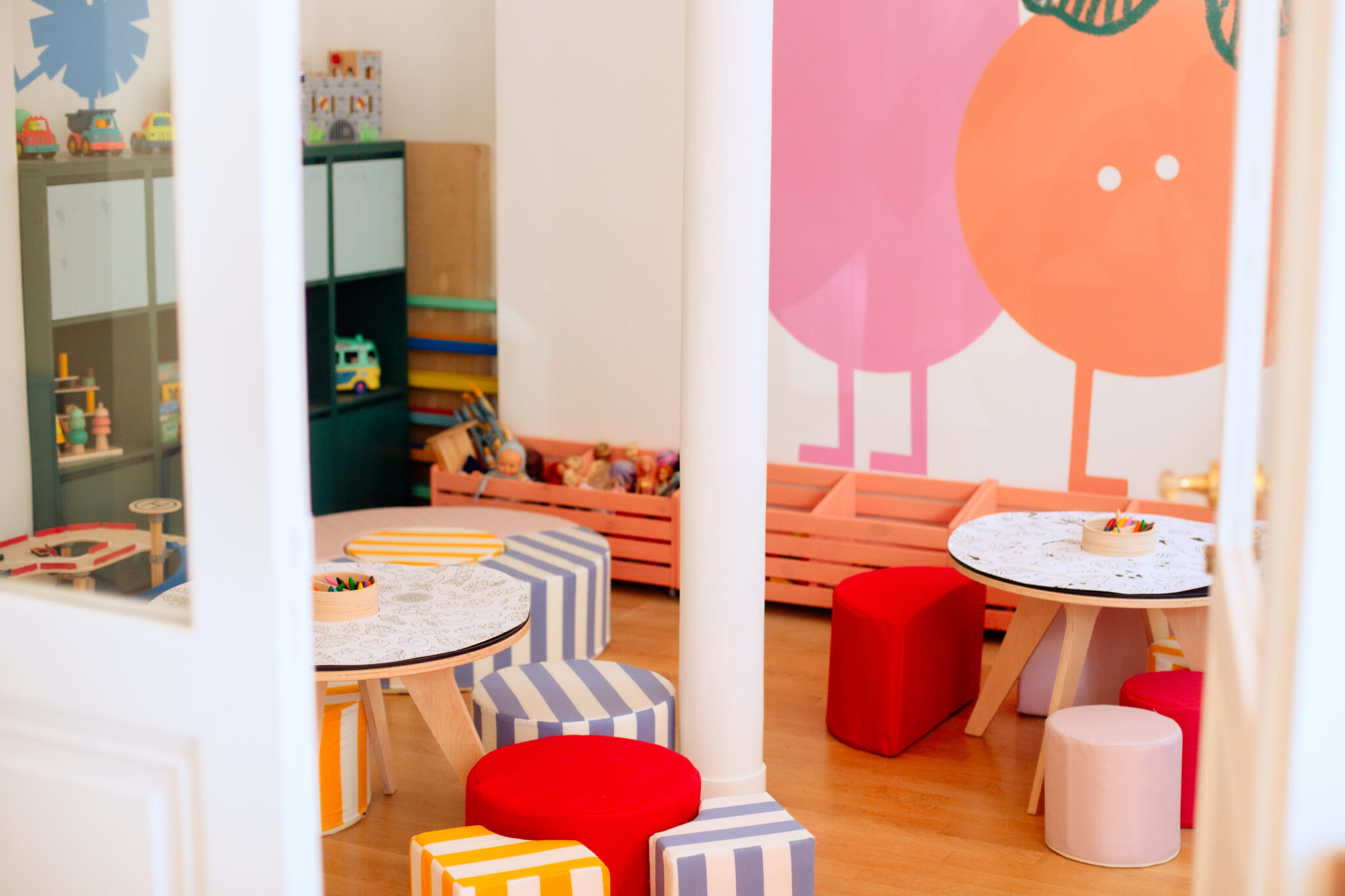
Structuring the room into different zones promotes concentration. A
reading nook with soft cushions offers a haven for quiet moments,
away from the hustle and bustle. Conversely, a creative play area should benefit from good lighting and easy-to-clean surfaces, ready to accommodate paint and modeling clay.
Don't forget to leave some free space on the floor. This "empty space" is
essential for impromptu obstacle courses or
giant constructions. Defining a children's activity area also helps to channel energy: they move around in the center, they concentrate near the light.
Adapting furniture to the size and independence of children
Independence begins with accessibility. Choosing
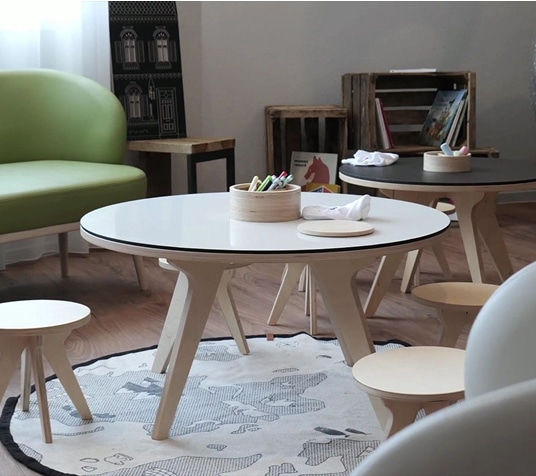
children's playroom furniture that's the right height for them makes all the difference. Children should be able to grab a book, take out a board game, or sit down at their table without needing an adult's help. This is the very principle of active learning.
The harmonious integration of these elements into the design of a child's space in the home requires prioritizing durable materials and soft lines. Well-proportioned furniture gives a child confidence: they feel in control of their environment, which strengthens their self-esteem.
The games table, a central element of the layout
A games table for drawing, building and imagining
At the heart of the room, the table plays a major social and creative role. It's the
gathering point. Choosing a well
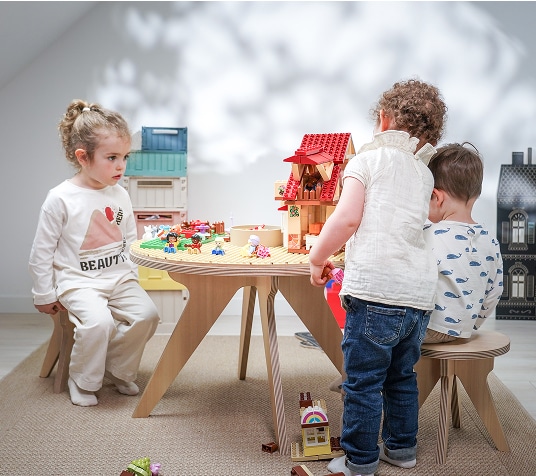
children's play table allows siblings and friends to come together around a shared project. At
Drawin'kids, we believe that furniture should evolve with changing needs.
A multifunctional children's table quickly becomes indispensable. It serves alternately as a desk for early homework, a surface for snacks, or a large canvas for a collaborative artwork. The tabletop height, ideally around 48 cm, ensures a comfortable posture for long periods of play without fatigue.
Multiply your activities with the right accessories
The versatility of the furniture prevents cluttering the space with multiple desks or stands. By integrating pencil holders or storage bins directly into the center of the table, the work surface is freed up. Accessories for children's activities should be within easy reach to avoid stifling their creativity.
The ability to change the surface of the board (switching from paper to a
blackboard or whiteboard) reignites interest. A simple change of medium is
often enough to rekindle the desire to create.
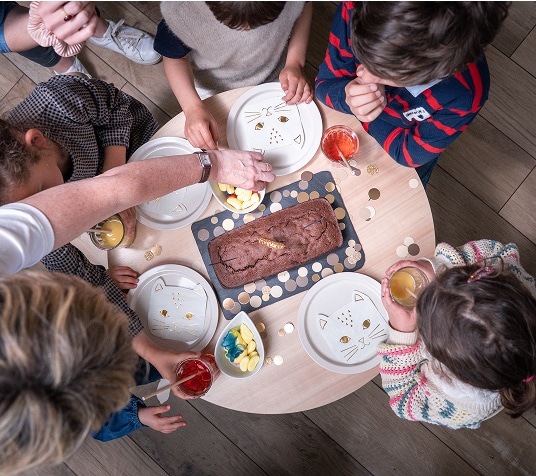
Fostering creativity with a variety of media
Drawing, coloring and crafts on a daily basis
Drawing and coloring for children are much more than
just pastimes; they are tools for emotional expression. To
encourage this practice, the materials must be inviting. Paper with
varied patterns or erasable surfaces helps to demystify mistakes:
you draw, you erase, you start again.
Varying children's creative activities stimulates their
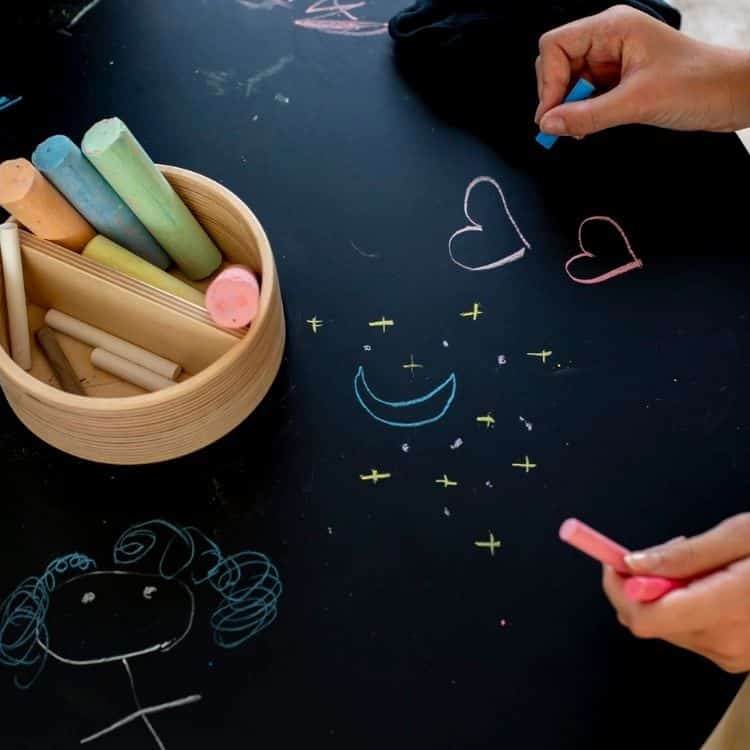
dexterity. Offering crayons, markers, or chalk in the same designated space enriches their sensory experience. The child learns to adapt their movements depending on the tool they are holding.
Building blocks and compatible game boards
Budding builders need stability.
Children's building sets require a flat, rigid surface. Nothing is
more frustrating than a tower collapsing due to an unstable mat.
Using a building block base integrated into the
table provides this safety.
This also allows a project to be left unfinished without having to tidy everything up
for dinner. The child can return to their work later, which fosters
perseverance and the ability to carry out a project over the long term.
A functional and easy-to-store playroom
Accessory storage and visual organization
Tidying up shouldn't be a chore, but rather the logical conclusion to playtime. A functional playroom offers intuitive solutions. Open bins, low shelves, and color-coded systems help children sort their belongings.
The goal is to limit the number of toys out at once. Rotating toys is an excellent tip: by storing some of the toys in a closed cupboard and leaving only the essentials accessible, you renew the child's interest in their own toys while making it easier to keep things tidy.
Encourage independence and the joy of playing
A well-organized space empowers children to take ownership of their tidying. When they know
exactly where each item goes, they enjoy putting things back in order. This is a skill that will serve them well in other areas of their lives.
The environment should suggest the activity. A blank sheet of paper placed on the
table, bricks ready to be assembled, or an open book on a display stand are silent invitations that work much better than verbal commands.

Create an evolving space that grows with the child
The ideal playroom layout is never set in stone. It evolves with the child's growth,
progressing from a playmat to their first complex constructions, and then to
more precise artistic pursuits. Investing in quality furniture with
a timeless design allows you to navigate these stages without having to replace everything every
year. A successful playroom is one that knows how to fade into the background, giving
space to the growing personalities of those who use it, becoming the
privileged setting for their most cherished childhood memories.
Our latest articles