How to use drawing to improve language skills in children?
In summary
| Language objective | Activity with drawing | Educational benefit |
| Enrich the vocabulary | Draw a character or an object | Learning concrete and descriptive words |
| Structuring thought | Describe what you drew | Sentence construction and narrative logic |
| Encourage oral interaction | Drawing together and asking questions | Taking turns, active listening, oral formulation |
| Stimulating emotional expression | Create an illustrated personal story | Putting emotions into words, free expression |
| Working on syntax | Adding speech bubbles to a comic strip | Use of short, well-punctuated sentences |
| Develop oral comprehension | Follow a detailed drawing instruction | Accurate understanding of instructions |
| Acquire thematic vocabulary | Coloring with guided choices (animals, objects, nature) | Words associated with a specific theme (shapes, colors, etc.) |
| Strengthening visual memory | Match word-image (e.g., "draw a red flower") | Learning via dual coding (visual + verbal) |
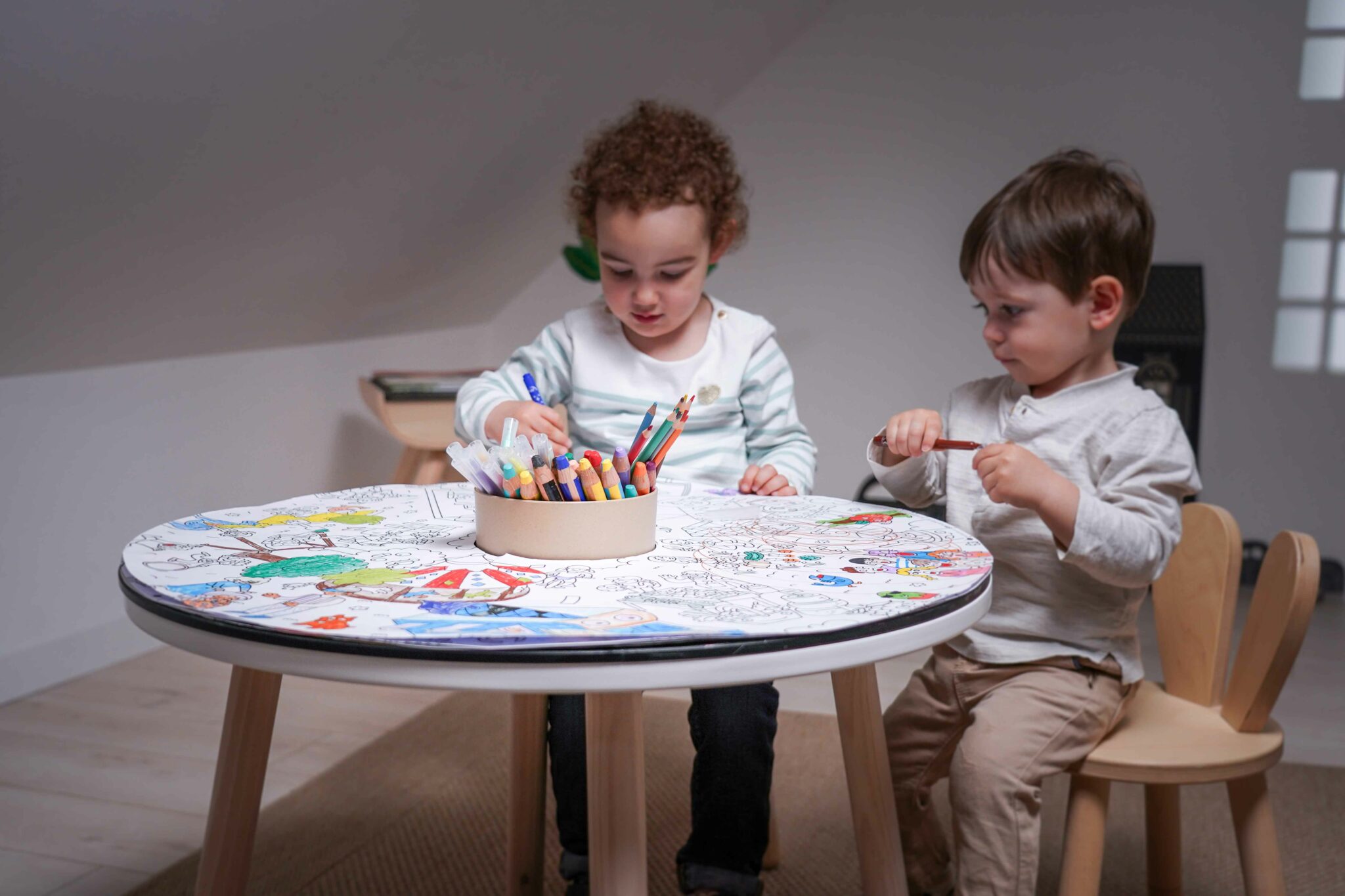
At the house of Drawing Kids, we believe that the creativity is a essential key for the development of children. Drawing, in addition to being an artistic activity, is also a educational tool Fantastic. It stimulates not only the child's imaginationbut also allows to strengthen skills in native language or foreign. Find out how the drawing, via the Drawing tablecan become a true support language learning.
Why drawing helps to learn a language in a fun and effective way
The dual impact: visual and verbal
THE Drawing stimulates simultaneously visual memory and the verbal thoughtThis dual activation allows children to retain permanently the vocabulary and better understand linguistic structures. By creating a mental image linked to precise word, the child establishes a strong connection between what he sees and what he hears or pronounces.
The word-image association: a key to memorization
To associate a drawn shape a written or spoken word allows strengthen learning through a double codingas several educational studiesFor example, a child who draw a cat while he learns word cat in English associates visually and audibly this new foreign term.
Freedom of expression: less pressure, more pleasure
The drawing allows for a free exploration of the language, without fear of judgment or verbal errorThe child expresses themselves at their own pace, which promotes the speech and the construction of spontaneous phrasesThis autonomy supports a growing confidence in its capacity to express themselveseven in a new language.
An engaging method: learning while having fun
Thanks to this playful approachthe child learns by playing, without feeling the academic pressureHe discovers the foreign language like a expression gamewhich reinforces its natural motivation to communicate. Attention then turns to the meaning and not on performancewhich is ideal for young people learners.
An emotional involvement: memory and linked emotions
The drawing promotes a emotional involvementbecause the child invests himself personally in his artistic creationHe identifies with his drawings and their characters, which further strengthens memorization vocabulary used. This emotion associated with the image makes thelearning more vibrant, authentic and striking.
Simple activities to stimulate language with the Drawin'table
Here are some ideas for activities you can easily do at home with your child:
| Activity | Educational objective | Stimulated tongue |
| Drawing in pairs | Working on taking turns and repetition | Oral language |
| Color while naming the colors | Learning basic vocabulary | Descriptive language |
| Create a scene with characters | Structuring a simple story | Narrative language |
| Draw an object and ask a question | Encourage questioning and listening | Oral interaction |
There Drawing'table is much more than a simple creative furniture : it's a true support language development. Thanks to its multiple surfaces (chalk, felt-tip pen, paper), it allows you to vary the exercises while promoting a Comfortable posture. Here are some easy activities to implement to the house, to transform each creative moment opportunity language learning.
1. Draw in pairs to exchange and repeat
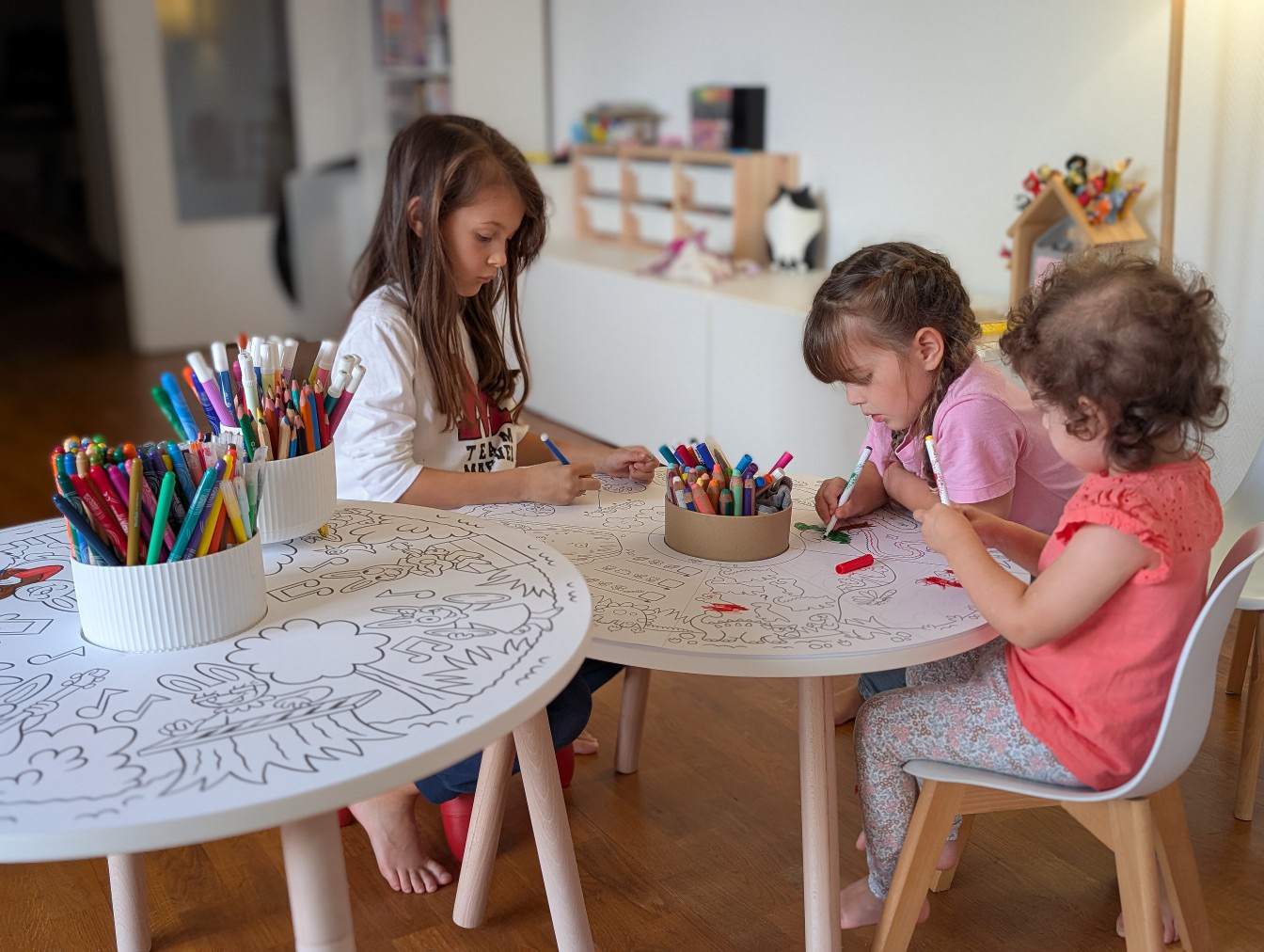
Drawing together is a simple activity and fun which favors the natural exchanges. The child learns to wait for his turn, to listen, then to comment on this that you draw. By repeating certain common expressions, he strengthens its oral bases while developing a better attention.
2. Color with guided choices to enrich vocabulary
Give the choice between two colors For each item to color: "Do you want to use blue or the dark green "?". This approach encourages the child to express his preferences and actively retain the names of colors used.
3. Create an illustrated scene to structure a story
Let the child draw a full scene with several elements (characters, objects, scenery), then invite him to tell this which is happening. He will be able to invent a short story, to give names, imagine dialogues: all of that strengthens the narrative logic and develops the sentence construction.
4. Ask questions based on a drawing to encourage conversation
After drawing a mysterious objectAsk a question: "In your opinion, what is "Did I draw?" or "Can you tell me "What do you see?" This encourages the child to formulate a hypothesis, to be asked questionsand to stay listening answers.
The Drawin'table: furniture adapted to these educational games
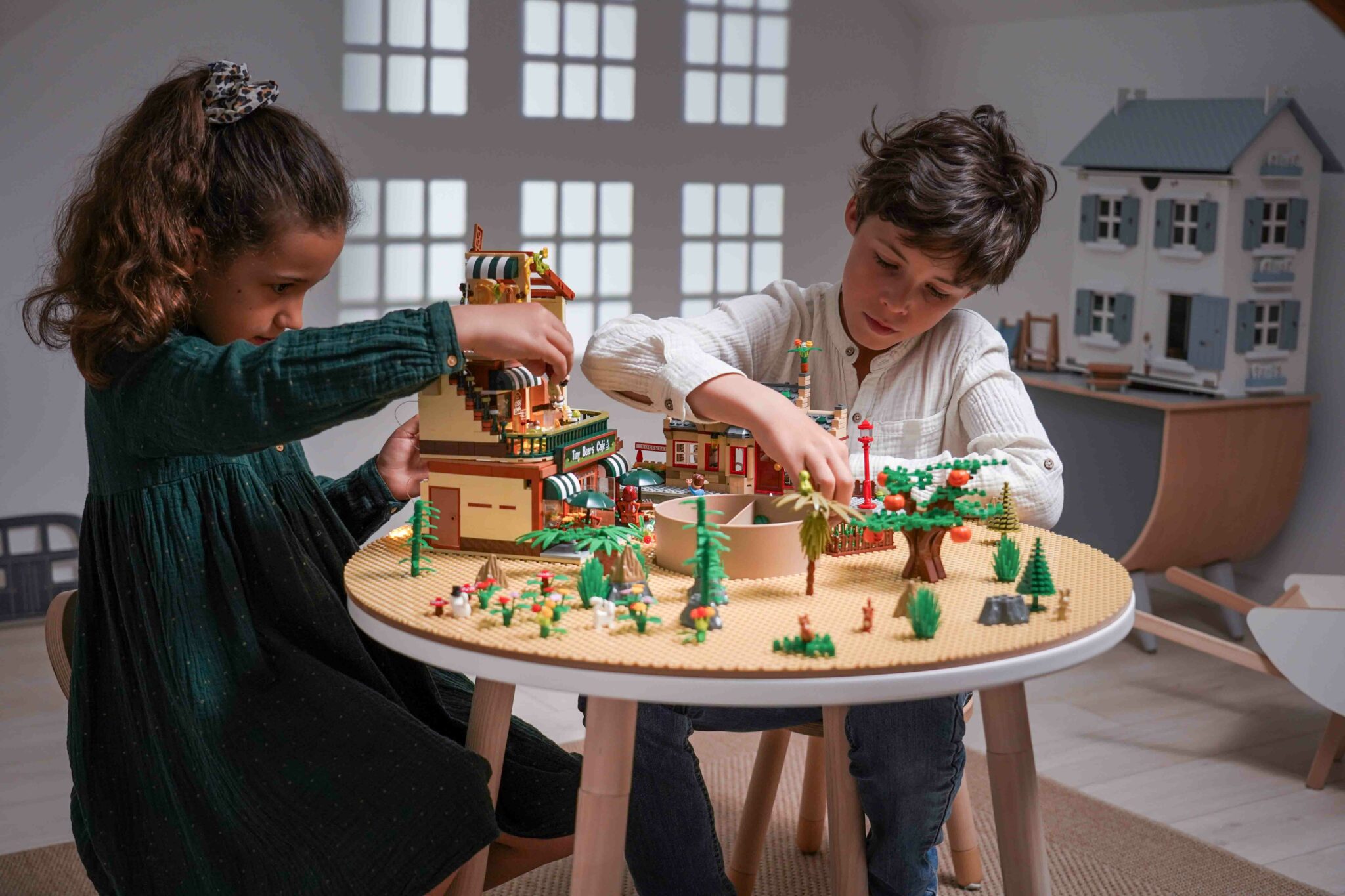
Each of these language activities can be carried out on the Multifunctional drawing tabledesigned to adapt to creative needs children. Its low profile, its surfaces reversible and its sheets to theme make it a ideal support to learn everything while having fun.
Drawing to enrich vocabulary and structure thought
The drawing is a front door natural towards the structured languageBy drawing a snowman or an animal, the child learns to name each part and to describe this that he represented. This activity reinforces both the oral comprehension and the lexical memory, while promoting the grammatical construction.
Describe a drawing, it's practicing speech in a context reassuring. The child then mobilizes his active vocabulary, practices at structuring its phrases, and gets used to organize your ideas in a way logic and consistent.
| Example of instructions | What this develops |
| "Can you draw a cat with a hat?" | Understanding instructions |
| "Tell the story behind your drawing." | Oral expression |
| "Draw what you see in the room." | Observation + concrete vocabulary |
A simple activity to develop fluent and precise language from a very young age
These spontaneous exchanges are rich in They help children with learning formulate complete sentences, to be used vocabulary plus precise and express oneself with Insurance. The Drawing'table allows to reproduce these exercises on a daily basis, in a space adapted and encouraging.
Adapted learning materials for having fun thanks to Drawin'kids
The Drawin'table: furniture designed for language and creativity
With its multiple surfaces (felt-tip pens, chalk, paper), the Drawin'table promotes a freedom of expression total. Children can go there draw freely, write their first words or create illustrated storiesThis furniture becomes a a real tool educational to full.
Ergonomic stools: comfort to promote better concentration
Children are better able to concentrate when they are sitting comfortably, to a height suitableDrawin'kids stools ensure a stable posture to write or drawfacilitating attention and fine motor skills.
Example of an activity: using comics to build language
Creating a comic strip allows the child to to tell a history with bubbles, while drawing the scenes. This combines:
- Simple writing with short dialogues
- Expressive drawing : to illustrate the action
- Visual storytelling : to learn to organize your narrative
| Stage | What the child learns |
| Create a character | Descriptive vocabulary |
| Imagine an action | Constructing a narrative |
| Add bubbles | Syntax, punctuation |
The final word: learning a language becomes easier when you're having fun
At Drawin'kids, we are convinced that the drawing is a footbridge between the play and learning. Thanks to appropriate tools, like the Drawing tableevery child can develop its language skills in complete freedom and with daily pleasure.
Our latest items