Visual routines for children: an effective tool for calming emotions and organizing daily life
Rushing to wake up, preparing meals, homework, and hectic bedtimes: family life can sometimes feel like a marathon! The results? Exhausted parents, stressed children... and tensions that build up.
The good news? There's a simple, fun, and effective solution to restore serenity: visual routines for children.
Parents are exhausted… and so are the children! Yet there is a simple and effective method to make these moments smoother: visual routines for children.

What is a visual routine?
A visual routine is simply an educational tool that clearly and visually represents the different stages of a child's daily life.
Rather than long explanations or multiple reminders, the child can clearly see what awaits him:
- Getting up and getting dressed ?
- Have breakfast ?
- Go to school ?
- Tidy your room ?
- Take a bath ?
- Brush your teeth ?
- Read a story before going to sleep ?
These tools transform abstract instructions into concrete and visual benchmarks, adapted to the development of young children.
At a glance, everything becomes more concrete and more accessible!
Why do visual routines soothe emotions?
Children need predictability to feel safe. The problem is that they have trouble projecting themselves into the future. However, when they know what will happen next, they are more relaxed and cooperative.
Visual routines bring valuable benefits:
- Predictability Knowing what the day will be like reassures the child and reduces their anxiety.
- Fewer conflicts The adult is no longer the one who asks the child to do things, but the one who accompanies them. Visual support becomes the reference.
- Enhanced autonomy : the child can check for himself what he has to do, without waiting for his parents to repeat it 15 times.
- Pride and confidence : each successful step is a small victory that feeds her self-esteem.
By making daily life clearer, visual routines limit crises, soothe emotions and strengthen cooperation.
An asset to lighten the parental mental load
Beyond children's well-being, visual routines are also a real gift for parents. How many times a day do we repeat: "Go wash your hands," "Put on your shoes," "It's time to sleep"?
With a visual chart, reminders become almost unnecessary:
➡️ The child anticipates the stages of their day.
➡️ The transitions are smoother.
➡️ Tensions are easing.
Result: less shouting, less stress, and a lighter mental load for the whole family!
How to set up an effective visual routine?
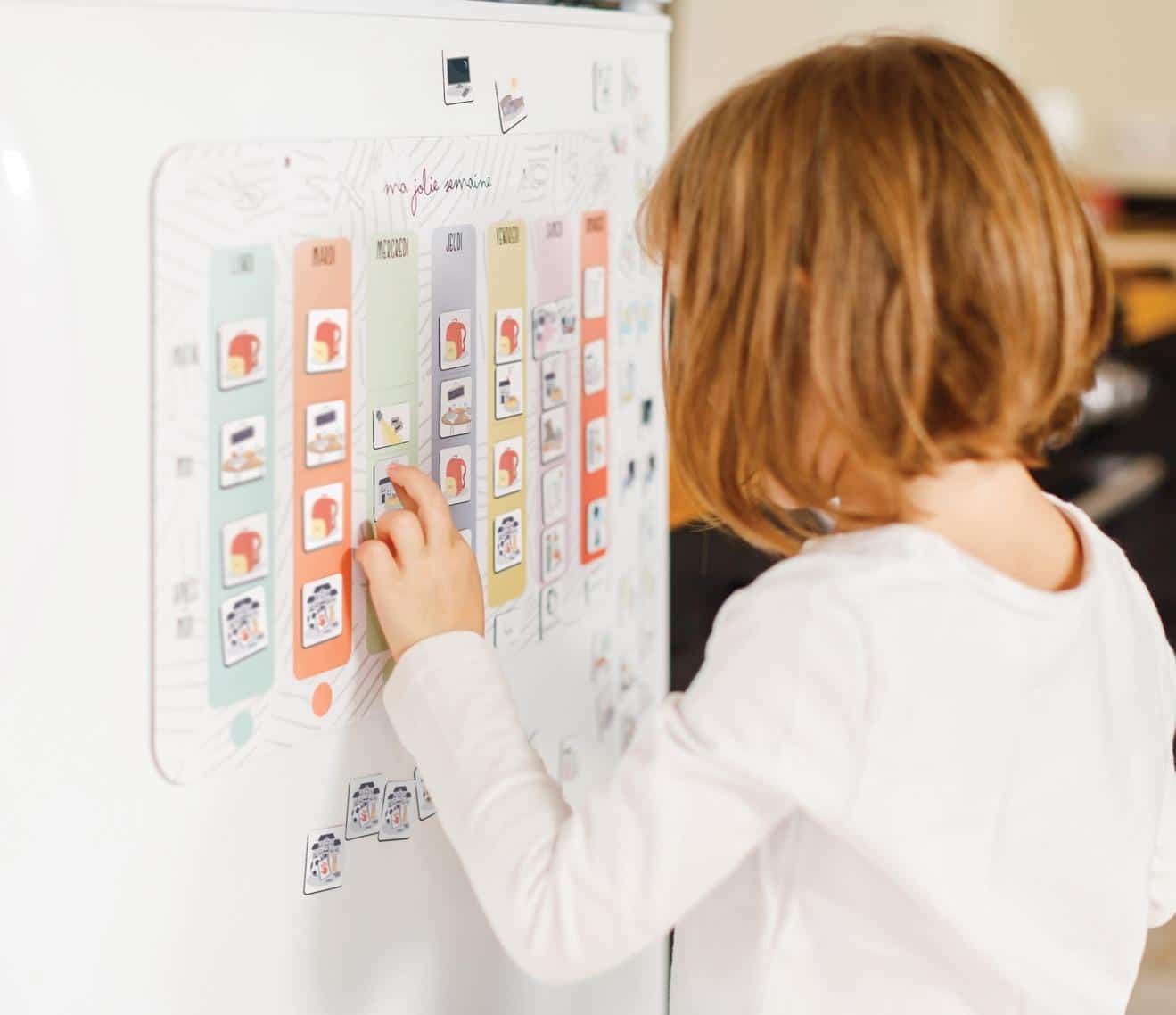
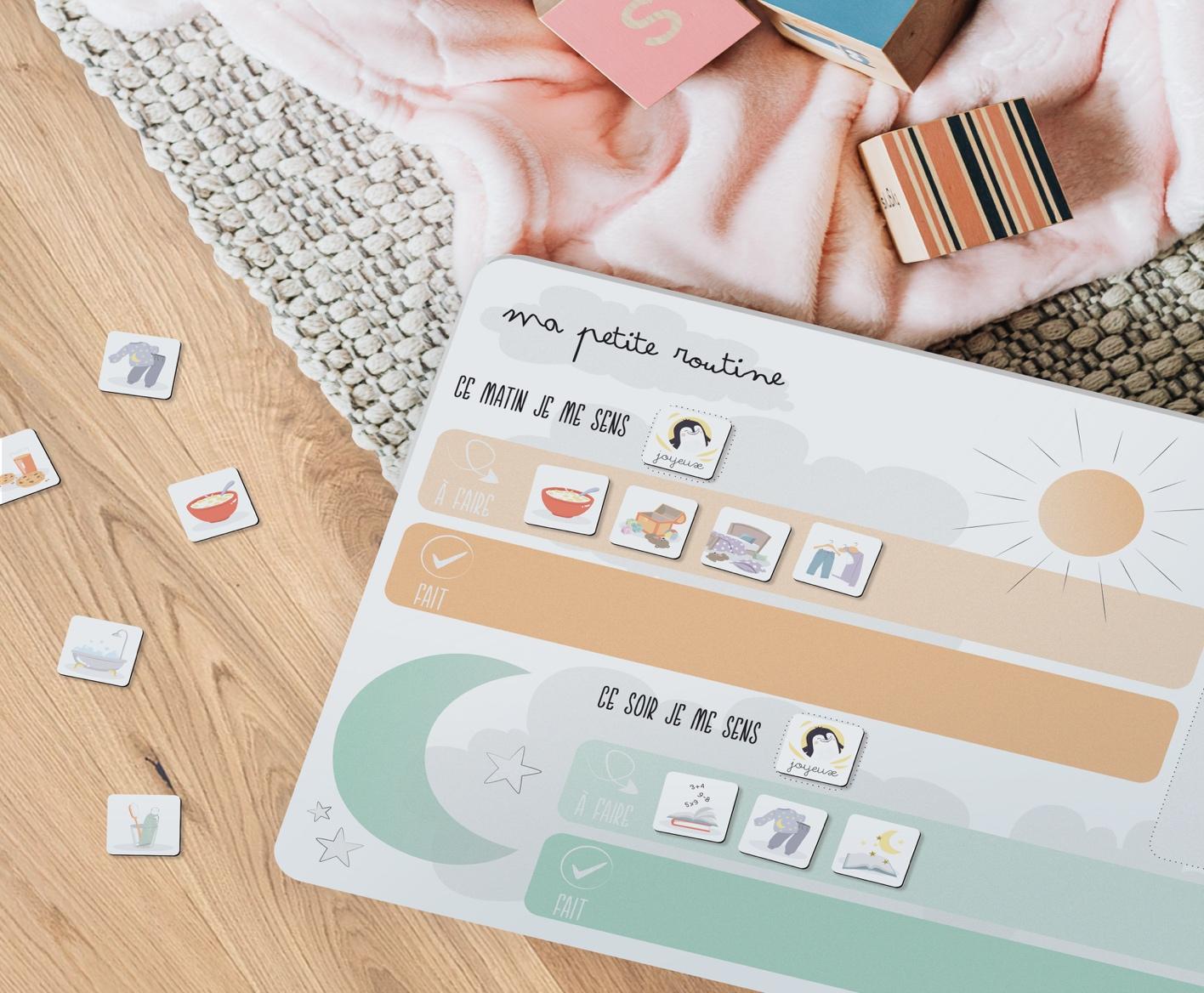
- Choosing the right support Weekly planner, magnetic board, illustrated cards… The important thing is that it is accessible and adapted to the child’s age.
- Involve the child : allowing him to manipulate the magnets or place the pictograms promotes his engagement.
- Be regular : the routine must become a daily ritual for the child to truly integrate it.
- Highlighting successes Praising the child when they follow the routine reinforces their motivation.
Atelier Gigogne has notably designed playful, colorful and easy-to-use materials such as My lovely week Or My little routine to support families in this process.
Visual Routines: More Than a Tool, a Family Ritual
Establishing a visual routine isn't just about saving time. It's about creating a family rituala reassuring environment in which the child can grow up with confidence.
Beyond organization, visual routines are also a fantastic educational tool that promotes language, helps with learning about time, and develops autonomy from a very young age.
In short, it's a real springboard for growing in confidence, gaining independence, and calming emotions. Why not try this little boost that can change families' lives today?
Our latest items